

Calm. Confident. Connected. Grounded. Hopeful. Joyful…

Equine-Assisted Services (EAS)
Experience a unique therapeutic approach that combines the calming presence of horses with professional mental health support. At Equinnect, sessions are:
Person/client-led, trauma-informed & responsive
Co-facilitated by a horse and a well-experienced, qualified mental health professional
Designed to enhance self-awareness, connection, confidence, curiosity, and well-being
We integrate mental health and counselling support to ensure individualised safety, comfort, and emotional regulation as you work toward your mental health or life skills goals. Each session incorporates best practice and recognised psychological approaches tailored to your individual needs, drawing from:
Humanistic psychology
ACT (extension of CBT)
Somatic practices
Nature-based therapy
Art therapy
Polyvagal theory
Existential and experiential approaches
This ensures you reach your outcomes in the safest, most appropriate, and comfortable way for you. Please refer to the Counselling in Nature page for more information on the approaches used.
What to Expect:
Gentle, on-foot interactions (observation, grooming, groundwork, leadership, and exploration exercises)
No riding required; no prior horse experience needed.
A calm, natural setting that promotes resilience and personal growth. See more benefits of therapy in nature on our Counselling in Nature page.
Benefits (many…but include)
Emotional expression and regulation
Stress reduction and relaxation
Self-awareness and insight
Improved confidence and interpersonal skills
Coping and self-soothing and supportive skills
Who Can Attend:
Individuals (ages 10+); pairs on special request.
Adolescents
Adults
NDIS participants (Registered Provider for EAL and Counselling)
Session Details:
$150 per 50 minutes
Safe, supportive environment with Tanya and her equine partners—Burke, Mabel, or other 🐴 friends
Book Your Session Today
Discover how Equinnect can help you feel grounded, hopeful, and connected, whilst supporting your mental health or healing journey.
Through Tanya's deep love for learning, her work and care for humans and horses, and her evolving understanding of the horse-human connection, she has discovered that Equine-Assisted Therapy offers a safe and enjoyable therapeutic environment for personal growth.
Equine-assisted Therapy (EAT)
Equine-Assisted Therapy is one type of EA Service (EAS). EAT offers a relational experience with a horse through activities that enhance self-awareness, connection, well-being, and practical life skills that extend beyond the session.
Grounded in a non-judgmental, confidential, strength-based, and person-centred approach, EAT reflects a predominantly humanistic framework for supporting, improving, and sustaining mental health.
When co-facilitated by a mental health professional, like at Equinnect, sessions are guided by evidence-informed practice, ensuring emotional and physical safety while linking each activity to established therapeutic principles. This allows tailored support for diverse needs, including trauma, anxiety, grief, and emotional regulation challenges.
Learning occurs experientially in partnership with the horse and continues after the session as individuals process their experience in both conscious and subtle, reflective ways. This integrated approach provides depth, clarity, and continuity, promoting meaningful insight and sustained personal growth.
How does it work?
EAT with Burke, Mabel, or his horse companions offers a safe space to be yourself, free from judgment, and with self-compassion. These experiences foster deep self-connection, allowing your inner wisdom to emerge through attentive listening. This wisdom can come from your life, culture, environment, and nature. Your horse co-facilitator helps you practice mindfulness, self-awareness, and presence, sparking insights that guide your growth.
In EAT, you are the expert of your own life. With a deeper understanding of yourself as a physical, psychological, spiritual, and social being, you can steer your own healing and personal development. Tanya and your horse co-facilitator offer gentle feedback to help you apply newfound insights, enhancing skills, self-care, relaxation, and joy.
EAT sessions are varied and tailored to your needs, but learning how to interact with a horse safely is a key part of the experience (including applying and developing self-awareness, self-care boundaries, & self-compassion).
EAT boosts your confidence, brings joy, and provides a unique way to develop and enhance your life skills, mental health, and healing journey.


Who can do it?
EAS is beneficial for nearly everyone. If you're curious, reach out to Tanya to explore if EAS could be helpful for you, a loved one, or someone you care about.
EAS (in combination with a qualified mental health professional) has proven effective for a wide range of individuals, including those struggling to reach life goals, mental health challenges, whether diagnosed or undiagnosed. This includes conditions such as depression, anxiety, PTSD, autism, disordered eating, acquired brain injury, and substance use recovery.
EAS also supports individuals dealing with life-limiting illness, anticipating or processing loss, and those facing other psychosocial or neurological conditions.
Please note that horses are large animals and may move suddenly or unpredictably. While training is provided on safe behaviour around horses, participants must be able to understand and follow instructions to ensure their safety throughout the session, during interactions with the horse, and while on the property.
Why the horse?
Instinctive Teachers: Horses are naturally intuitive. Their survival instincts allow them to pick up subtle cues from humans, making them exceptional guides in emotional and behavioural awareness.
Highly Attuned: Horses are incredibly sensitive to their surroundings, including the emotions and energy of people, offering a unique opportunity for connection and presence.
Authentic Feedback: Horses consistently and authentically display their nervous system responses, helping humans better understand and regulate their emotional states.
Building Connection: The bond created through attunement between horse and human fosters awareness, understanding, and meaningful self-reflection.
Emotional Regulation in Action: Horses naturally return to a calm state after emotional activation, modelling self-regulation and resilience that participants can practice and apply in their lives.

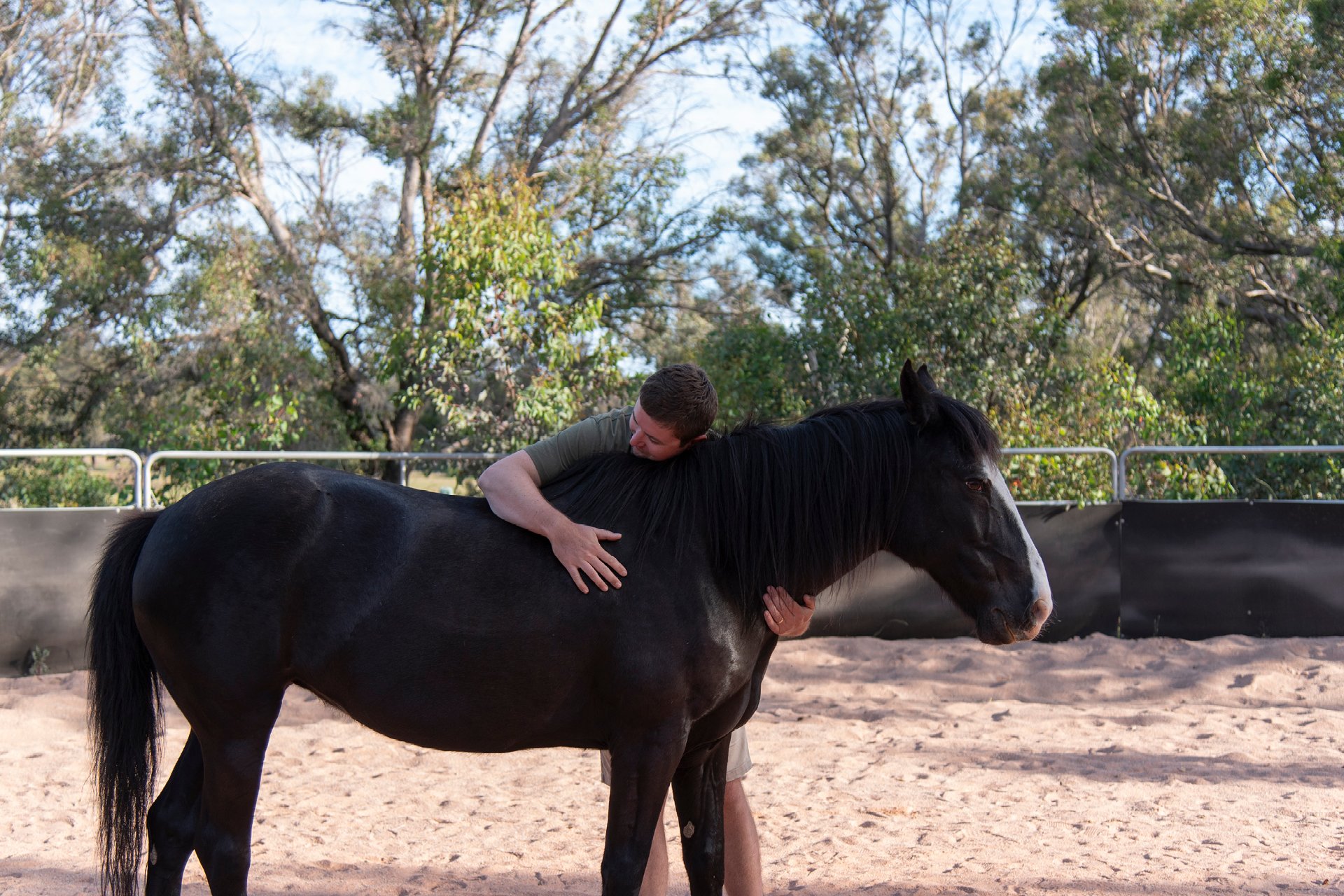
“The horse will teach you if you listen”
Ray Hunt, Horseman
What are life skills?
Some individuals are interested in improving their life skills. The World Health Organisation (WHO) identifies 10 core life skills: self-awareness, empathy, decision-making, problem-solving, critical thinking, creative thinking, effective communication, coping with stress, emotions, and interpersonal relationships. For other identified life skills and more information about this, visit here. Enhanced life skills can expand your thinking, helping you personally and or professionally. They also assist you to engage and participate in your relationships and community safely and positively.
If you are interested in developing your life skills, this approach to learning supports you in listening to yourself and your needs gently and then self-managing or self-regulating your responses. Learning and practising these skills with the assistance of an EAS horse builds your confidence, self-esteem, and self-worth (amongst many other benefits). And you can have fun and experience joy, too!

Increased self-awareness & confidence.
At Equinnect, you'll learn essential skills for safely interacting with a horse, which can boost your self-esteem. As you work with the horse, you'll gain confidence and self-awareness while observing their behaviour, which offers non-judgmental feedback to help you adjust your thoughts, feelings, and actions.
You'll also enhance your observational and awareness skills through nonverbal communication with the horse. EAS fosters personal growth, expanding your self-perception and unlocking your potential.

Joy & Relaxation.
This is your time to relax, play, and bring joy back into your life. You'll discover your inner wisdom, creativity, and authentic positivity with the horse's support and Tanya's guidance. The EAS environment helps you reconnect with yourself, others, and nature, reminding you of your true essence.

Enhanced Communication.
EAS sessions with your horse co-facilitator focus on verbal and nonverbal communication, emphasising nonverbal skills, which horses excel at. These activities enhance self-awareness, helping you understand, empathise, and communicate more effectively with others.
Through improved active listening, observation, and respect for boundaries, you can build trust, confidence, and empathy while strengthening relationships. Enhanced self-perception, clearer communication, and accountability support informed decision-making and alignment with your values, goals, and plans, fostering healthier, more functional relationships.

Compassion – self & others.
In this open, caring, and nonjudgmental space, you can connect with your true self and practice compassion—for yourself by taking this time and with your horse co-facilitator through empathy and care.
You are not required to share your thoughts or feelings during your EAS session. Any insights that arise are yours to keep and apply to daily life. If you choose to share, you’ll be supported in a safe environment, and we can explore referrals to additional support if needed.
The horse is always available as a trusted confidant, offering a quiet space for acknowledgment and reflection on your experiences.

Mental health & well-being.
Equine-assisted Services (EAS) supports health and well-being through connection with nature, horses, and reflective observation. EAS offers mental, emotional, and physical benefits, such as reduced stress, improved mood regulation, relaxation, and gentle movement. It helps individuals tune into their whole selves—body, mind, and feelings—fostering understanding, communication, and acceptance of their experiences.
EAS nurtures well-being by enhancing self-awareness, purpose, and quality of life. Interacting with horses, embodying a sense of ‘wildness,’ reminds us of life beyond societal roles and labels, encouraging self-acceptance, boundaries, and clear communication.
EAS also benefits horses, aligning with Equinnect’s and Zia Park’s commitment to equine welfare. Older horses who enjoy human interaction can remain active and social through EAS, reflecting a synergistic relationship between humans and horses, supported by emerging evidence.

An EAS session provides an individual with a unique opportunity for self-compassion and gentle life-learning. And whatever the individual discovers is theirs to keep and apply to their life at their readiness and choosing.
How EAS differs from other talk therapies...
Equine-Assisted Services (EAS) adds to traditional counselling or psychotherapy in its approach and focus. While counselling and psychotherapy are often talk-based only and guided by a therapist to address psychological concerns or intentionally explore deeper emotional issues, EAS uses experiential, nature-based interactions with horses to boost personal growth, learning, and self-awareness.
Key distinctions include that EAS is:
Experiential Learning: EAS involves hands-on activities with horses, emphasising reflection and observation as well as structured discussion. These interactions help participants learn through experience rather than verbal processing alone.
Non-Clinical Setting: EAS often occurs in outdoor or natural environments, offering a relaxed and non-clinical atmosphere that promotes well-being through connection with nature.
Builds Skills, Strengths, and Insights During the Session:
EAS support the development of practical, transferable abilities that enhance emotional and social functioning.Participants engage in activities that foster self-compassion, grounding techniques for calmness and emotional regulation, clear verbal and non-verbal communication, healthy boundaries, self-awareness, and empathy.
These skills emerge naturally through experiential interaction with the horse.
When deeper psychological concerns surface, or when an individual wishes to work toward stabilisation, recovery, or more intentional self-care management and healing, Tanya integrates evidence-informed counselling/psychological approaches to ensure safe, trauma or mental health-informed & responsive support.
Referrals to other professionals are recommended when clinically appropriate, maintaining a high standard of care and continuity. And Tanya is happy to work collaboratively with other members of your care team to support and sustain your holistic care. For example, GP, clinical psychologist, psychiatrist, and other medical or allied health specialists.
Partnership with Horses: As sensitive and intuitive animals, horses provide non-judgmental feedback through their behaviour and interactions. This dynamic creates opportunities for self-reflection and growth in a unique, non-verbal way.
EAS complements counselling or psychotherapy towards addressing complex mental health concerns. It focuses on fostering well-being and personal development through experiential and relational learning.

The Equinnect experience.
Discover more about the unique Equine Assisted Therapy sessions by Tanya & Burke, Mabel, or other skilled horse co-facilitators.